
Studies of software development estimate that rework consumes roughly 20–40% of programming time or project effort. Much of it is committed engineering work built twice: story points that survive code review get rebuilt after merge — not because the design was wrong, but because the handoff never specified them. The industry misdiagnoses this as a tooling problem, staging another round of the Figma Dev Mode versus Zeplin debate, while the cost driver sits upstream: tickets shipped without machine-readable tokens and enumerated states.
A June 2026 arXiv paper gives the waste a name: handoff debt, the rediscovery cost imposed when a predecessor's work is opaque or incomplete. Its takeover experiments show coding agents resuming from context-bearing handoffs burn 20% to 59% fewer events than successors handed a bare repository. Solved rates barely move — the waste lives in rediscovery, not capability. That is the shape of SaaS rework: decisions nobody made at handoff time, not information lost in transit.
The economics are firm-level. Birdview PSA's reference consultancy — 60 people at a $150 blended bill rate — leaks paid hours into rework from bad handoffs, status chasing, and scope changes nobody priced: a phantom team the firm pays for but never sees. Interviews with more than 40 firms since early 2025 suggest most can recover up to 20% of delivery capacity without hiring. Another inspection tool fixes none of it.
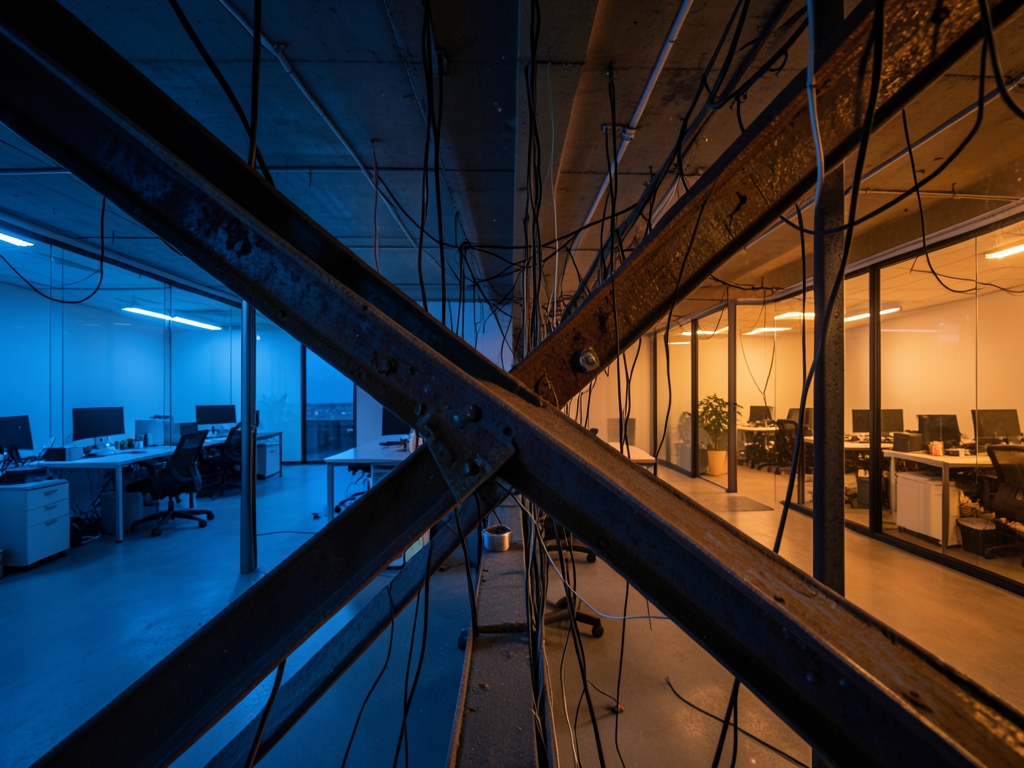
Where the Rework Hides
Count the states. A typical SaaS component carries a full set of interactive states — default, hover, focus, active, disabled, loading, error — and the handoff frames most teams ship specify only a few of them. The uncomfortable conclusion follows: engineers, not designers, are deciding much of every component's behavioral surface, one defensible guess at a time. The rework discussed throughout this guide is not spread evenly across projects; it concentrates exactly where those guesses were made.
The guesses cluster into three ambiguity classes, and they share one property that matters more than their differences: each is a decision, not an artifact. A missing hover state was never drawn, so no layer exists to inspect. Token drift lives in the delta between a Figma style and its coded counterpart — each side reads correctly on its own. An unenumerated responsive breakpoint or permission-gated view is behavior nobody defined, which means no tool can enumerate it after the fact. File inspectors surface artifacts. Decisions leave no artifact until someone guesses one into existence.
| Ambiguity class | What the frame shows | Why no inspector catches it | Where it resurfaces |
|---|---|---|---|
| Missing interaction states | Default view only; hover, focus, disabled, error, empty, loading undrawn | States exist as decisions at interaction time, not as pixels on a layer | QA pass, or the first customer hover |
| Token drift | Figma styles and coded values have diverged silently | Inspector reads each side faithfully; the defect is the gap between systems | Visual regression review |
| Unenumerated behaviors | One viewport width, one permission level rendered | Nothing was drawn to find | Post-launch, via support tickets |
Now trace one guess through the money. An ambiguous frame reaches an engineer mid-sprint; rather than block, she makes the most defensible reading and builds it. Code review passes — not because anyone verified intent, but because reviewers see working UI, and the working UI matches the frame. The mismatch stays invisible until QA, or worse a paying customer, hits the state nobody drew. The return ticket gets filed as a "design revision," lands in the next sprint, and displaces capacity already committed to different work. That displacement, not the original build, is where the loss accumulates.
Guessing beats asking for structural reasons. Spec questions raised in Slack during build break an engineer's flow, and every context switch carries a restart cost — reloading the codebase, the decision history, and the 'why.' An engineer facing a slow reply does not wait — she guesses and moves on. Most spec questions therefore never get asked, which means most guesses never appear as questions at all. Asynchronous guessing is simply the default whenever the handoff contract is prose.
Your delivery dashboard will report none of this. Velocity looks healthy because rework points get re-committed as new stories — the second attempt to build a component counts exactly like the first. Unless teams tag original-versus-rework epics separately in Jira or Linear, the loss sits inside "delivered" scope wearing a green status. The countermeasure is unglamorous: apply a design-revision label at triage, then sum relabeled points against committed capacity each quarter.
This is also why the persistent faith in better viewers keeps failing. Figma Dev Mode and Zeplin are file inspectors — excellent at rendering artifacts, structurally blind to decisions. Upgrading the inspector cannot recover states nobody drew or tokens nobody reconciled. Before evaluating any tooling, run the cheap experiment: take your most-used components, count their interactive states, and compare that count against what your last handoff frames actually specified. The gap you count yourself is the capacity a token-synced contract buys back — no purchase required.
The Receipts
Independent field evidence corroborates the failure mode. In one ERP implementation, a complex deal with custom terms was marked done, but Finance hadn't approved the credit logic — the implementation sat idle for ten days while the teams traded emails outside the system. Missing states, drifted tokens, unenumerated edge cases are all undocumented decisions — and undocumented decisions are exactly what the research prices, because information degrades at each transfer and every handoff becomes a point of quality loss rather than a neutral pass-off.
The bottleneck economics run upstream, too. As JPMorgan Chase Chief Analytics Officer Derek Waldron put it: 'An hour saved here and three hours there may increase individual productivity, but in end-to-end processes these snips often just shift bottlenecks.' Note what that lens measures: the end-to-end chain — how decisions get specified, versioned, and transferred — not isolated task speed.
Those external anchors frame the question; the published research answers it for software broadly. Studies of software development estimate that rework consumes roughly 20–40% of programming time or project effort, and they identify handoffs between teams as a major source of that rework, because information degrades at each transfer. The mechanism, not the vendor, is the story. If upgrading the handoff tool eliminated rework, transfers would stop degrading information — nothing about a viewer changes what was never specified.
What isolates the variable that matters is specification timing. Teams that write acceptance criteria into every ticket before sprint planning hand builders a complete contract; teams writing criteria during or after build leave each ambiguity to be settled by whoever builds it. Every decision deferred to build time is a decision made by guesswork. The contract, not the conduit, carries the signal.
Action for this week: pull last quarter's closed tickets, tag each reworked one as design-caused or not, then test one binary — did the ticket carry written acceptance criteria before sprint planning started? If your pre-criteria tickets rework far less than the rest, you have generated your own receipt, and the case for purchasing tooling before writing the contract collapses on your own data.
| Evidence | Sample | Finding | What it rules out |
|---|---|---|---|
| KC & Budathoki, arXiv:2606.02875v1 (June 2026) | 75 source tasks; 181 handoff-point tasks; 724 takeover runs per successor model | Context-bearing handoffs cut median agent events by 20–59% versus repository-only takeover | "Handoff waste is unmeasurable" |
| Birdview PSA interviews (published Aug 11, 2026) | 40+ professional services firms since early 2025 | Most firms can recover 10–20% of delivery capacity without hiring | "Recovering capacity requires headcount" |
| Latenode practitioner deployment (October 4, 2025) | Autonomous agents on targeted processes | 40–60% fewer handoffs; 20–30% lower cycle time | "Handoff volume is fixed" |
| Studies of software development | Software and construction knowledge work | Rework consumes roughly 20–40% of programming time or project effort; handoffs are a major source | "Rework is a niche problem" |
| Versa Cloud ERP implementation case | Sales-to-Finance handoff on a custom deal | Work marked done sat idle for ten days pending credit approval | "Handoffs are merely delays" |
Buy nothing yet. Scored on observed rework, onboarding load, and marginal cost per added squad, the four operating models design-ops teams actually run — File-Drop, Inspect-Tool, Token-Contract, Embedded-Pairing — split along a single line: whether handoff decisions exist as machine-checkable artifacts before sprint planning. That line kills the persistent belief that upgrading to Figma Dev Mode or Zeplin closes the gap. Teams on identical tooling can land anywhere in the rework distribution, because the variance tracks whether acceptance criteria existed before sprint planning — not which tool sat between the canvas and the repo. Inspection solves lookup, not decisions.

Four Handoff Operating Models, One Winner
For most product teams, Token-Contract wins outright on mechanism: a W3C-format token file synced from Figma to code, plus acceptance criteria written into every ticket before sprint planning, turns unstated decisions into things a CI job can verify — a drifted color token fails a diff; a missing error state fails a checklist item. Zeplin and Dev Mode make existing specs findable; they cannot make an unenumerated state exist. Enterprise work, as Sean Moran frames it, is a chain of decisions rather than a collection of tasks — and only one of the four models produces artifacts that check those decisions.
| Operating model | Observed rework | Onboarding per new engineer | Marginal cost per added squad | Reversibility |
|---|---|---|---|---|
| File-Drop (exported PNGs/PDFs) | Highest — every behavioral decision defaults to a guess | High — engineers reverse-engineer intent from static images and queue questions to designers | Near-zero tooling spend, but rework cost compounds with every squad added | Worst — nothing machine-readable survives; must be unwound before tokens can be adopted |
| Inspect-Tool (Figma Dev Mode, Zeplin) | Moderate — lookup improves, but unspecified states and edge cases still get guessed | Moderate — lookup is self-serve, but state and edge-case coverage still requires asking | Per-seat licenses scale linearly with headcount, plus residual rework | Poor — annotations don't migrate; pure inspection stacks must be unwound before token adoption |
| Token-Contract (synced W3C tokens + acceptance criteria in tickets) | Lowest — decisions are machine-checkable before sprint planning | Lowest — new engineers self-serve from the token source of truth and ticket criteria | Pipeline built once; marginal cost is ticket-writing hours, not licenses | Best — W3C format stacks cleanly with any future tool purchase |
| Embedded-Pairing (designer inside the squad) | Low — ambient conversation enumerates edge cases as they arise | Low while the designer attends daily; conversational, not documented | A dedicated slice of designer time per squad, every sprint | Neutral — no tooling lock-in; the constraint is headcount economics, not reversibility |
The exception is real, and it has a headcount. For very small teams, Embedded-Pairing wins: daily designer attendance keeps observed rework low, because ambient conversation enumerates edge cases faster than any artifact can. But the cost structure is linear where the contract's is not — a dedicated slice of designer time per squad, every sprint, indefinitely. At enterprise scale, that headcount spend outruns a token pipeline built once and a ticket discipline that costs hours rather than headcount. Attendance doesn't scale; artifacts do.
Then there is the tie-breaker the table must carry: reversibility. Tool purchases are coming anyway — the question is whether they stack. Token-Contract stacks cleanly with any future purchase, because W3C-format tokens are tool-agnostic; whatever you buy next reads the same token file. File-Drop and pure Inspect-Tool create lock-in that must be unwound before tokens can be adopted, which means buying inspection seats first costs twice: once for the seats, once for the unwind.
Apply the selection condition directly to your own org:
Run it against your org chart this week: count engineers, check your release cadence, and — before any procurement conversation — write acceptance criteria into the tickets already scheduled for next sprint and sync your token file. The contract is the decision; the tool is a later, optional accelerant.
| Your situation | Choose | Why it wins |
|---|---|---|
| Very small teams | Embedded-Pairing | Daily designer attendance beats artifacts at this scale — ambient conversation enumerates edge cases |
| Mid-size teams, biweekly releases | Token-Contract | Decisions become machine-checkable before sprint planning |
| Regulated enterprise, quarterly releases | Token-Contract plus a human sign-off gate before merge | Same contract baseline, with the approval trail a quarterly cadence and regulator demand |
Any rework figure carries a selection caveat. Organizations disciplined enough to measure rework tend to be disciplined everywhere else, so measured means tend to describe above-average performers — the true population figure could sit higher. Treat whatever baseline you adopt as a floor, not a ceiling.

What the Rework Rate Doesn't Tell You
Not all post-merge work is waste. Some committed points are deliberate spikes — timeboxed builds shipped to learn something — and folding them into any rework tally overstates the recoverable loss. The taxonomy now has a formal anchor: according to the June 2026 arXiv preprint by Dipesh KC and Anjila Budathoki (arXiv:2606.02875v1), "handoff debt" names the rediscovery cost imposed when a predecessor's work is opaque or incomplete. A spike has an owner, a timebox, and a written question; rediscovery has none of the three. Subtract your spike budget before quoting your rework rate upward.
The criteria-timing effect carries a confound no observational comparison can wash out: teams writing acceptance criteria before sprint planning also tend to employ staff-level PMs and run quarterly roadmap reviews, so part of the gap reflects general process maturity rather than the criteria practice alone. Read it asymmetrically. Where PM depth is thin, early criteria substitute for missing maturity and the payoff is largest; where a staff-level PM already runs quarterly reviews, expect smaller marginal gains. Thin process is precisely where the token-first contract earns its keep first.
Grade the vendor evidence before the vendors. Figma's published Dev Mode savings figures come from self-reported customer stories without control groups, and none isolate handoff quality from the general effect of a tooling upgrade — any purchase tends to flatter itself in retrospect. This is where the persistent belief dies: better handoff software does not close the gap. Identical tooling can land at opposite ends of the rework distribution, and the variance tracks whether acceptance criteria existed before sprint planning, not which tool sat between canvas and repo. Contract first; purchases after.
The scope has edges. The guidance skews toward B2B SaaS teams releasing monthly or slower. Consumer teams shipping daily A/B experiments sit outside it: when many merges are experiments built to be replaced within days, "rework" and "iteration" blur beyond measurement, and no clean percentage of committed capacity describes the loss. The contract still transfers to fast cadences; the accounting does not. Do not import the headline into a daily-experiment org and expect it to reconcile.
One 2026-specific risk cuts the other way. Generators such as Figma Make and v0-style codegen turn ambiguous frames into plausible code instantly, which may shrink rework volume while raising its severity — wrong guesses now reach production faster. Plausible output also suppresses the questions a developer would have asked a designer. Unstated states stop producing visible friction and start producing silent defects, which argues for the contract, not against it: synced tokens constrain the generator, and enumerated criteria catch what plausibility hides.
For the decision that matters — adopting the token-first contract before buying tooling — the published rework research remains the operative evidence, and every flaw catalogued above pushes the true loss up, not down. Before repeating any rework figure internally, run three checks: Did the team measure before anyone asked? Does the number net out deliberate spikes? Is the cadence monthly-or-slower B2B? Two "no" answers mean the figure describes someone else's organization — recalibrate before you budget against it.
| Source | Core claim | Controls | Verdict for planning |
| Studies of software development (aggregated via web search) | Rework consumes roughly 20–40% of programming time or project effort | Exact denominator varies by study; source snippets truncate | Directional planning range only |
| Figma Dev Mode customer stories | Savings attributable to the tool | Zero control groups; handoff quality never isolated | Marketing signal; do not budget against it |
| KC & Budathoki, arXiv:2606.02875v1 (June 2026) | Context-rich handoffs produce 20–59% fewer events than opaque ones | Condition-separated comparison | Best available taxonomy; different construct than SaaS rework |
| Birdview PSA interviews (published Aug 11, 2026) | 10–20% of delivery capacity recoverable via five levers across 40+ firms | Interview-based; services firms, not product squads | Adjacent-domain directional check only |
| Consumer A/B teams (outside sample) | Rework and iteration indistinguishable | Not measurable under current definitions | Exclude from headline math entirely |
Picture a scheduling-SaaS team that kept a ledger of its own rework, because the ledger is what makes the anatomy visible: story points committed in a quarter, a share of them rebuilt after merge. The headline share is not the useful part. When the team tags every rebuilt point with a cause, a few mechanical failures account for most of the
```
Quick answers
| What is 'handoff debt' as defined in the June 2026 arXiv paper? | Handoff debt is the rediscovery cost imposed when a predecessor's work is opaque or incomplete. |
| How much fewer events do coding agents burn when resuming from context-bearing handoffs versus a bare repository? | Coding agents resuming from context-bearing handoffs burn 20% to 59% fewer events than successors handed a bare repository. |
| What share of programming time or project effort does rework consume according to studies of software development? | Studies estimate rework consumes roughly 20–40% of programming time or project effort. |
| How much delivery capacity can most professional services firms recover without hiring, per interviews since early 2025? | Interviews with more than 40 firms since early 2025 suggest most can recover up to 20% of delivery capacity without hiring. |
| Why can't tools like Figma Dev Mode or Zeplin fix the rework problem? | Figma Dev Mode and Zeplin are file inspectors that are excellent at rendering artifacts but structurally blind to decisions, so upgrading the inspector cannot recover states nobody drew or tokens nobody reconciled. |